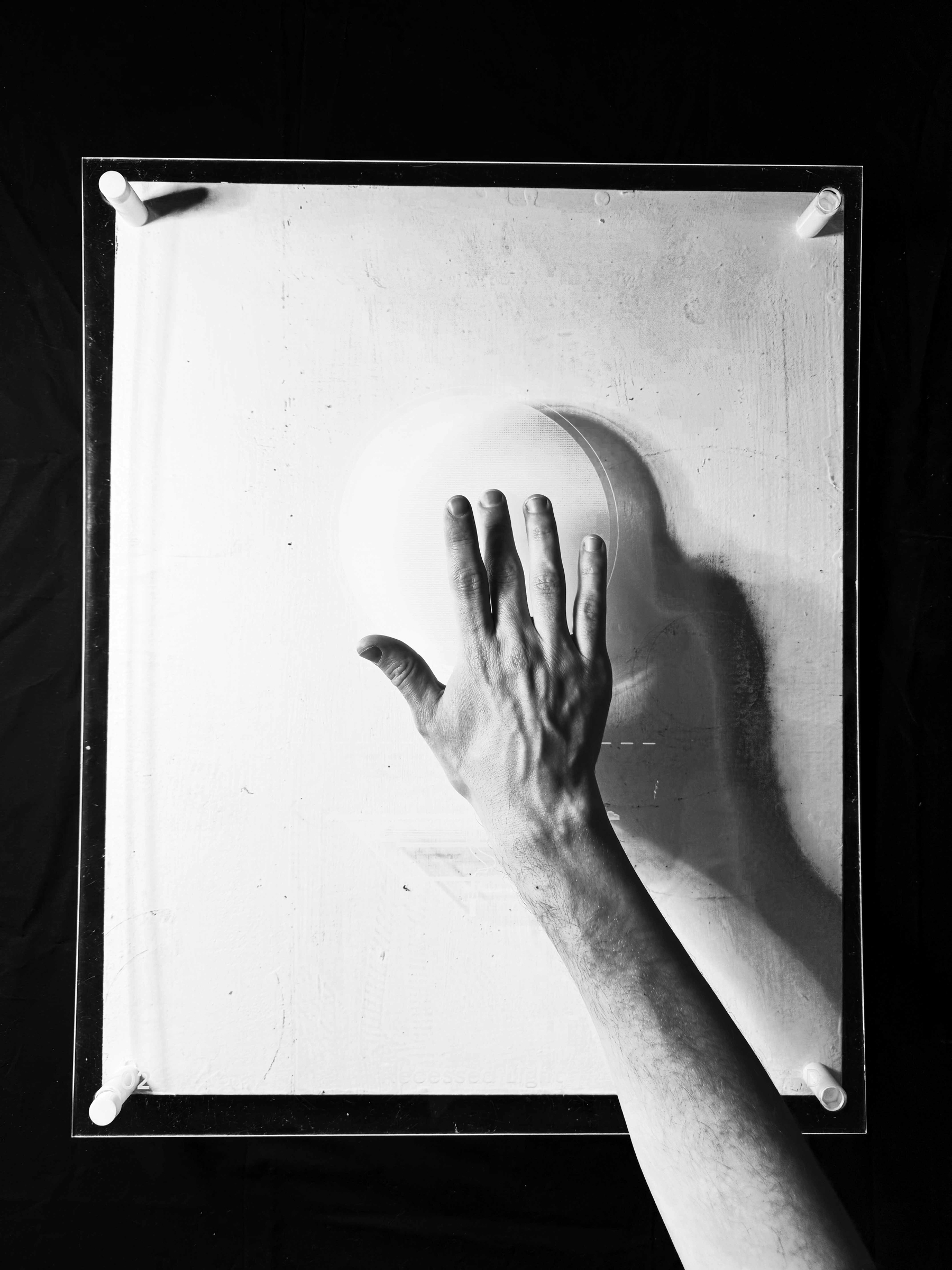
Showed this work yesterday while co-presenting with Hannah Wong at the ABLE Assembly (Berklee College of Music). When I started making tactile drawings a few years ago, I had a really hard time getting people to touch them in architecture reviews. This was probably partly because I was still making “visual things you can touch” rather than truly tactile artworks.
One strategy I came up with to remediate this was to start etching my drawings on glass. It reminded me of something that happened in my first architecture course. Everyone was encouraged to draw with extremely light, delicate lines. The argument went something like: If you draw with really light lines, people have to get closer to see your drawings. Your drawings moves people in physical space, and that’s powerful.
I was unconvinced. Part of the reason was probably that I couldn’t see these drawings even if I was very close. But when I made my first invisible drawing, I kind of got it. There is something powerful about a drawing that subverts you expectations and coaxes you to use your body in a different way. There’s also something interesting to me about a drawing that no one can see… Rather than helping blind people see, the tactile art becomes about helping sighted people to not see. Still have so far to go with these… they are really just scratching the surface of what tactile can be.