Last week I watched a student at USF I’ve been meeting with defend her architectural thesis. The project was a library designed for the blind community in Miami. She did a beautiful job in so many ways, integrating thoughtful details into the buildings, doing great research, including awesome participatory research at the Lighthouse. And her work subverted the expectations of the review in a way that I think a good architectural thesis often does.

A comment from Andrew Stone, one of her other advisors really stuck with me.

“What’s really successful, in a broader sense than this project, is that you’re thinking really critically about how to understand an experience that’s very different from your own. I think the methodology you used for doing that—the people you reached out to and the research you did—was very successful in that sense. I think that’s a skill that will serve you very well in architecture. It’s something that’s not very common. But you were trying to understand people who would be occupying your space, and thinking in terms of visual impairment, but it’s really applicable, I believe, to any type of different experience. We’re all different people, and the ability to listen to people and design based on their needs is a really important skill that you demonstrated with the trust you’ve been able to build. I think it’s a beautiful project, and i say that on Zoom where I can’t really see the building. But because of the trust you built and your listening I would trust you with a building even not being able to see it."

Lately I’ve been turning over some of the taglines and orthodoxies that come from disability activism in regards to design. One of them is conversation around the words we use to connect design and disability such as design “for” and design “with” disability.

“For” in these conversations often is used to represent well-intentioned, misguided designs for a population the designer doesn’t understand. It represents design the reinforces the designer’s ableist beliefs, purports to fix or cure disability, or unintentionally reifies stigma.

I believe designers should bring people we work with into the design process, of course. I believe design “with” disabled people is often not enough. Design “by” disabled people sometimes leaves me feeling flat. I love work that moves through disability to rethink assumptions that I thought were fundamental to the world we live in, in a way that wouldn’t have been possible without disability.

At the same time, we design “for” other people. There’s no escaping that. Design involves relationship building. I think joining with different perspectives is what allows disability expertise to intersect with other bodies of knowledge that benefits us—design expertise being one of them, even when it’s not created with disability in mind at all. We can pick up tools that weren’t designed “for” us at all and use them in unexpected ways. We have seen often in earlier moments that disabled people have had enormous creativity reclaiming and appropriating things, some of them things originally used to harm and stigmatize them, things that come from military science or eugenics.

And at the same time I think of Lauren A. Taylor’s position that true partnership means being willing to “change and be changed in ways that we cannot predict,” something different that ultimately involves a very high level of trust.

What does it mean to ask of well-meaning, or maybe even ill-intentioned relationships: what could trust look like here? Having a nuanced position on trust allows for allows for flourishing, and is a protection against entities that keep us at a comfortable distance and then us in the PR campaign, or extract our expertise and sell it back to us. Knowing what trust means helps us understand when not to trust too.

Here are a few thoughts on what trust means for me:

For me signs of trust are not only seeking out the most privileged people in the community; not expecting model disabled citizens who are high achieving, amicable, just the same as everyone else except for the fact that they happen to be disabled. It It can mean thinking beyond monoliths, assumptions, and categories and engaging with us as whole people.

Trust looks like being willing to create friction on our behalf, in a way that challenges and ultimately benefits the institutions we enter into. So often we just snap back to the tame version of an idea, but I like when things get pushed as far as they can go. Trust is being willing to have conflict so that we can actually negotiate and go deeper into our shared needs and desires.

And finally, it means being able to share deep desires for a different world, a quote below from an old journal:

_“It is when the creative sparks created by the friction of misfitting are allowed to catch and grow into large, ambitious creative projects. Design “through” disability is the way that we cultivate desire for disabled life, flourishing, invention, and expertise with significant value. Design “through” disability is not overcoming, though it may garner respect from non-disabled people in ways that they are not able to distinguish from overcoming. Design “through” disability is design that comes by embracing disability, not being averse to it, having real curiosity towards it and seeing its genuine strengths in someone who is living it. It is what Mia Mingus called “magnificent” and Alison Kafer called “a future that desires all of us.” The more stigma we face, the harder it may be to achieve this type of self-embrace, or receive this type of embrace from others. It is a fantasy of mine, but it is also not magical, mystical, or inspirational, it is simply a way of thinking that is closed off so tightly that its absense fosters a strong desire for it to exist. A crip future may be one in which this is so commonplace that it does not seem radical at all. Nonetheless, at present we are in a position to desire and appreciate it.” _


Disabled friend fired from architecture firm this week for “learning too slowly.” Still very far to go…


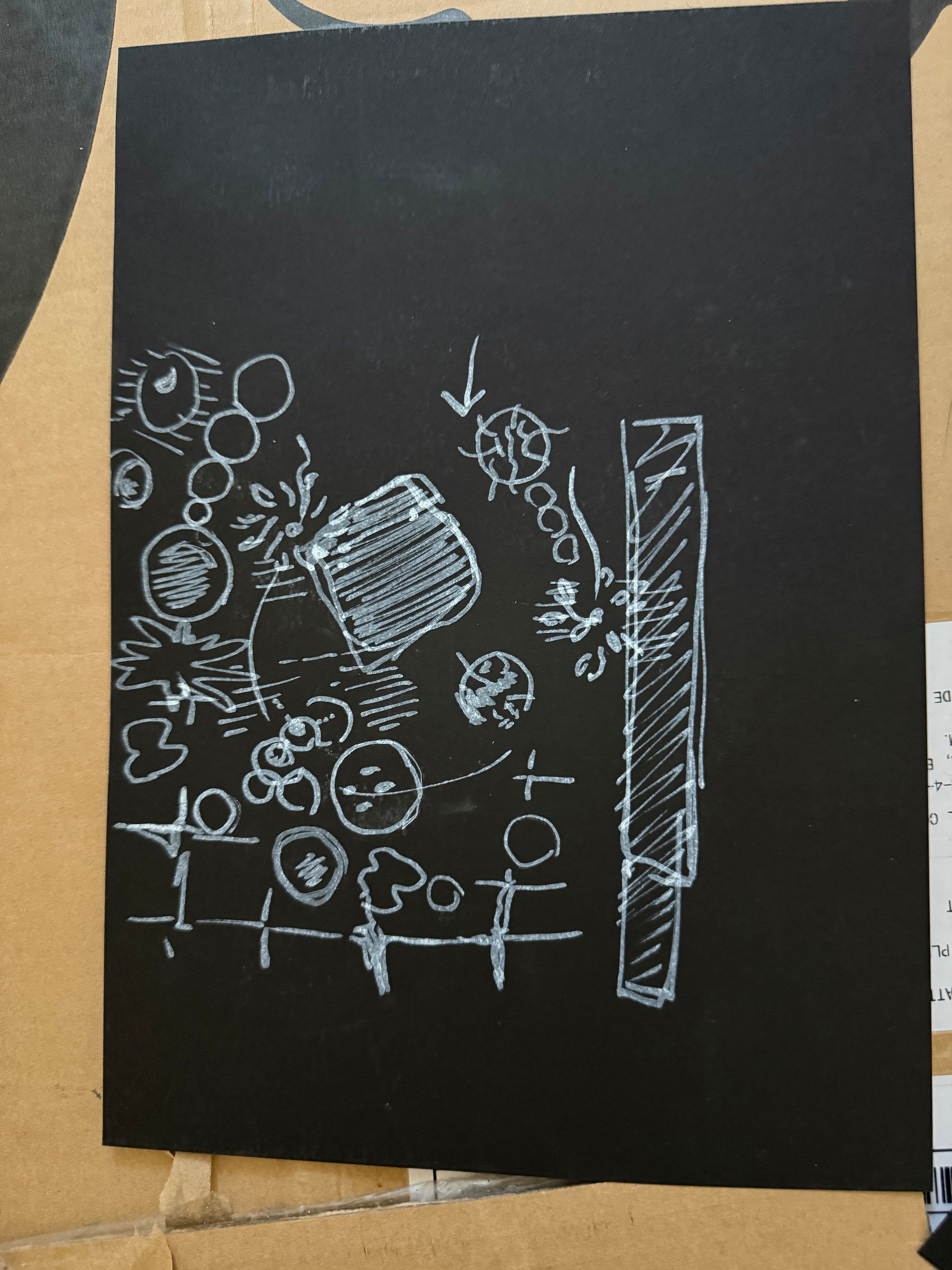
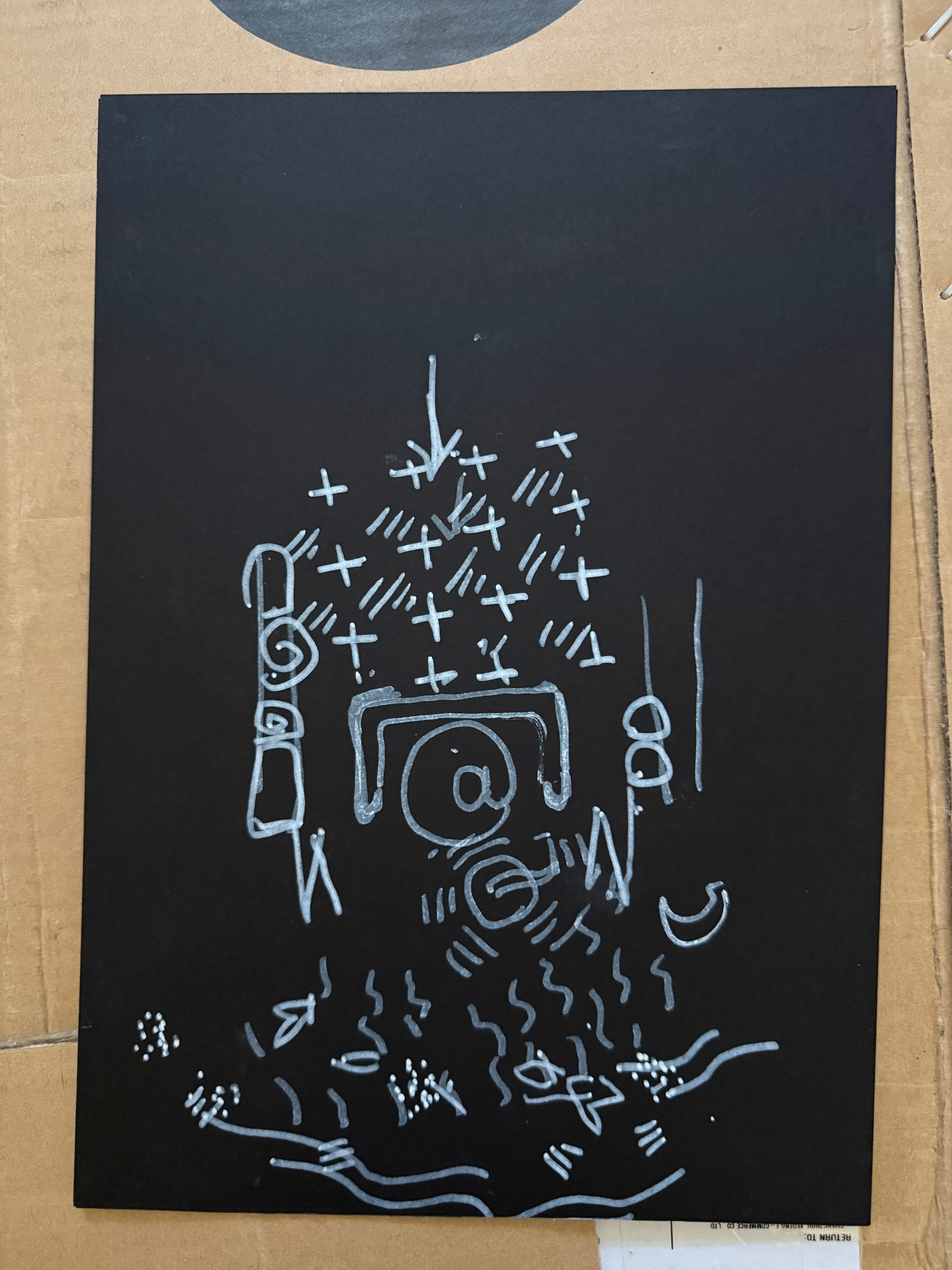
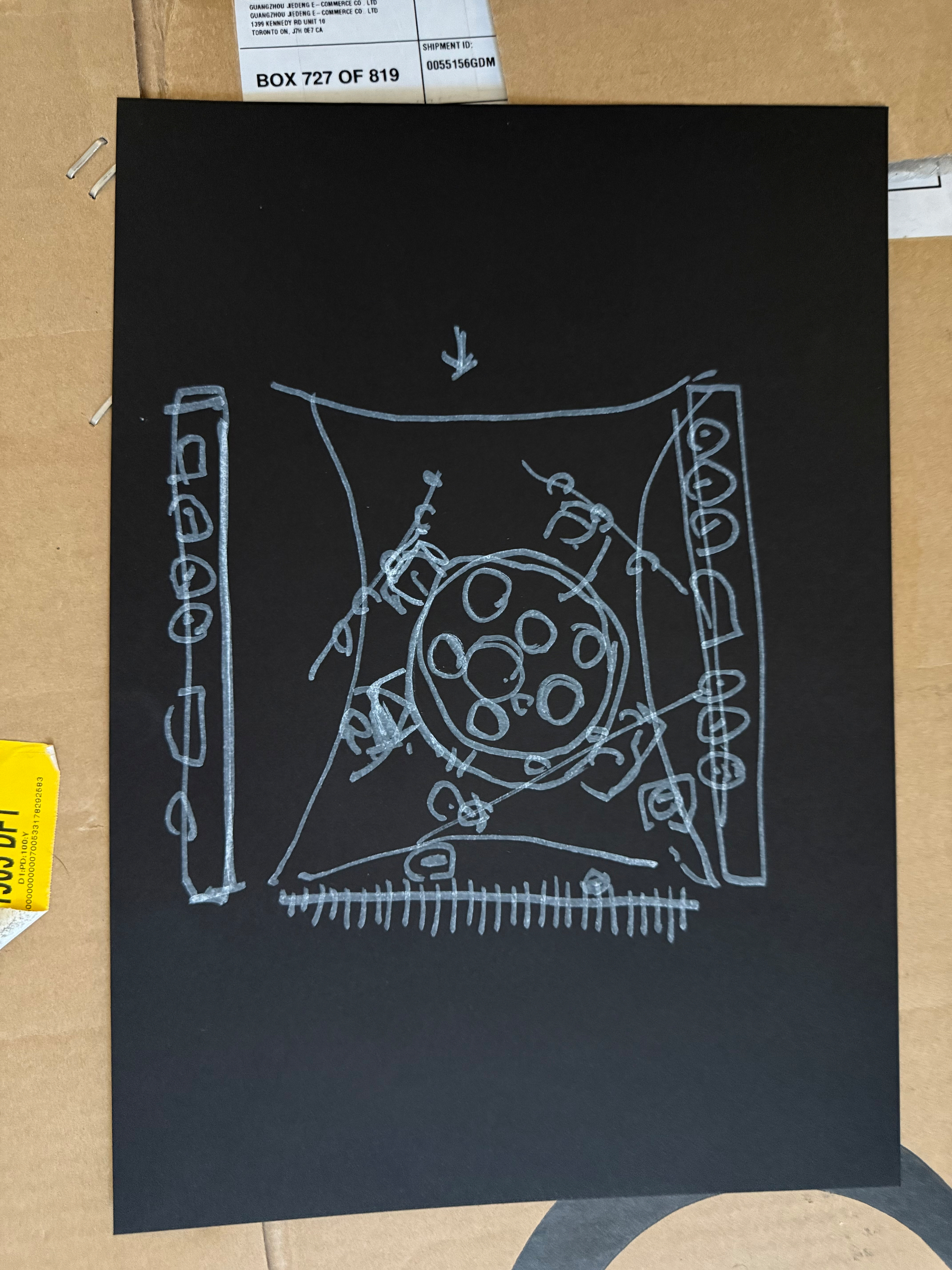
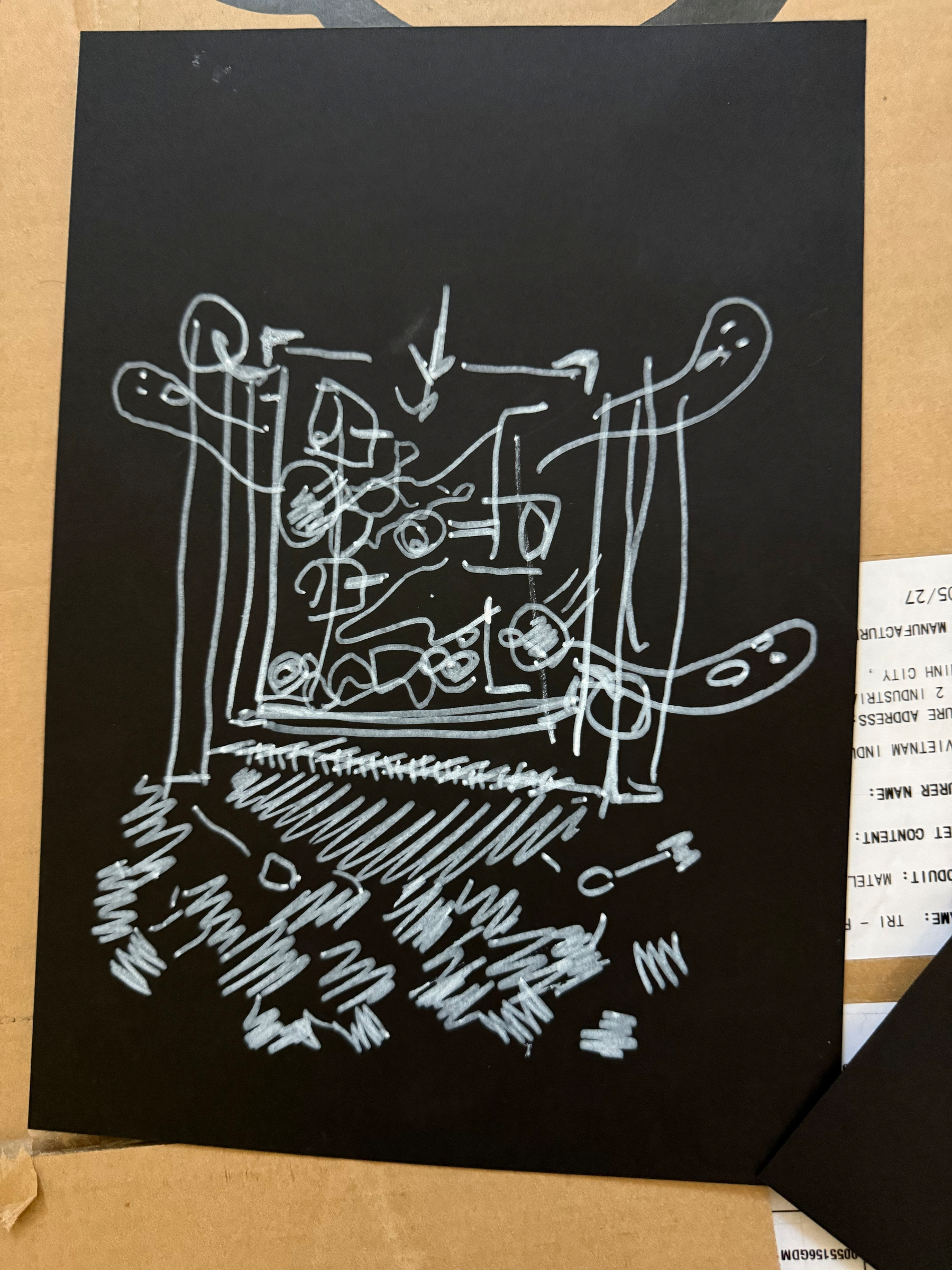
Quick image collection on the theme of “Dark Mode


Showed this work yesterday while co-presenting with Hannah Wong at the ABLE Assembly (Berklee College of Music). When I started making tactile drawings a few years ago, I had a really hard time getting people to touch them in architecture reviews. This was probably partly because I was still making “visual things you can touch” rather than truly tactile artworks.

One strategy I came up with to remediate this was to start etching my drawings on glass. It reminded me of something that happened in my first architecture course. Everyone was encouraged to draw with extremely light, delicate lines. The argument went something like: If you draw with really light lines, people have to get closer to see your drawings. Your drawings moves people in physical space, and that’s powerful.

I was unconvinced. Part of the reason was probably that I couldn’t see these drawings even if I was very close. But when I made my first invisible drawing, I kind of got it. There is something powerful about a drawing that subverts you expectations and coaxes you to use your body in a different way. There’s also something interesting to me about a drawing that no one can see… Rather than helping blind people see, the tactile art becomes about helping sighted people to not see. Still have so far to go with these… they are really just scratching the surface of what tactile can be.

A hand touching a piece of plexiglass mounted on a white surface. We can see the faint impression of a white on white drawing, partly because the hand is casting a shadow through the drawing. The photo is black and white, and the hand has the middle finger pressed down onto the drawing on the surface of the glass.

Saw these on the Instagram of Boston Architectural College a few months ago…

A person with long hair stands outdoors, touching a textured wall, with a palm tree visible in the background.A person wearing a black and white striped sweater is touching a pillar inside a large, ornate building with colorful stained glass windows.A person wearing headphones is touching two colorful, textured columns with a humorous caption about design students above.


New email to NAAB sent after our listening session


Thinking today of this quote from the first Disability Meets Architecture episode we did. It’s a quote from Karen Braitmayer:

_“One of the things I do is talk a lot about how we need to encourage young people with disabilities who have an interest in design to come join the design field. There are too many people down the food chain in a student’s life who say “oh, architecture, I don’t think you can do that, because… maybe you can’t climb a ladder… or your fine motor skills…” If there’s anybody listening out there who has had someone say to them “I don’t think you can be a designer,” just come talk to me [laughs].There are lots of ways to go around all those supposed “barriers” so that you can contribute. I think design is about having great ideas, and getting them down in a way that somebody can build it, and we need more people who understand different aspects of the world to engage in that process.” _


Now we’re getting somewhere.

Bzz beezzz bop fssshhh poppoppop glowy zzt psst fizzle glish glish

February: our first field recording for a house at Perkins. Audio quality is not great, but it brings me back; chatting with Charlotte, discovering the road and the water, rushing water at the dam, and the clucks and honks of geese echoing in the open air over the frozen river.

Transcript


Little experiment with blur and pixelation together

Honestly, who knows...

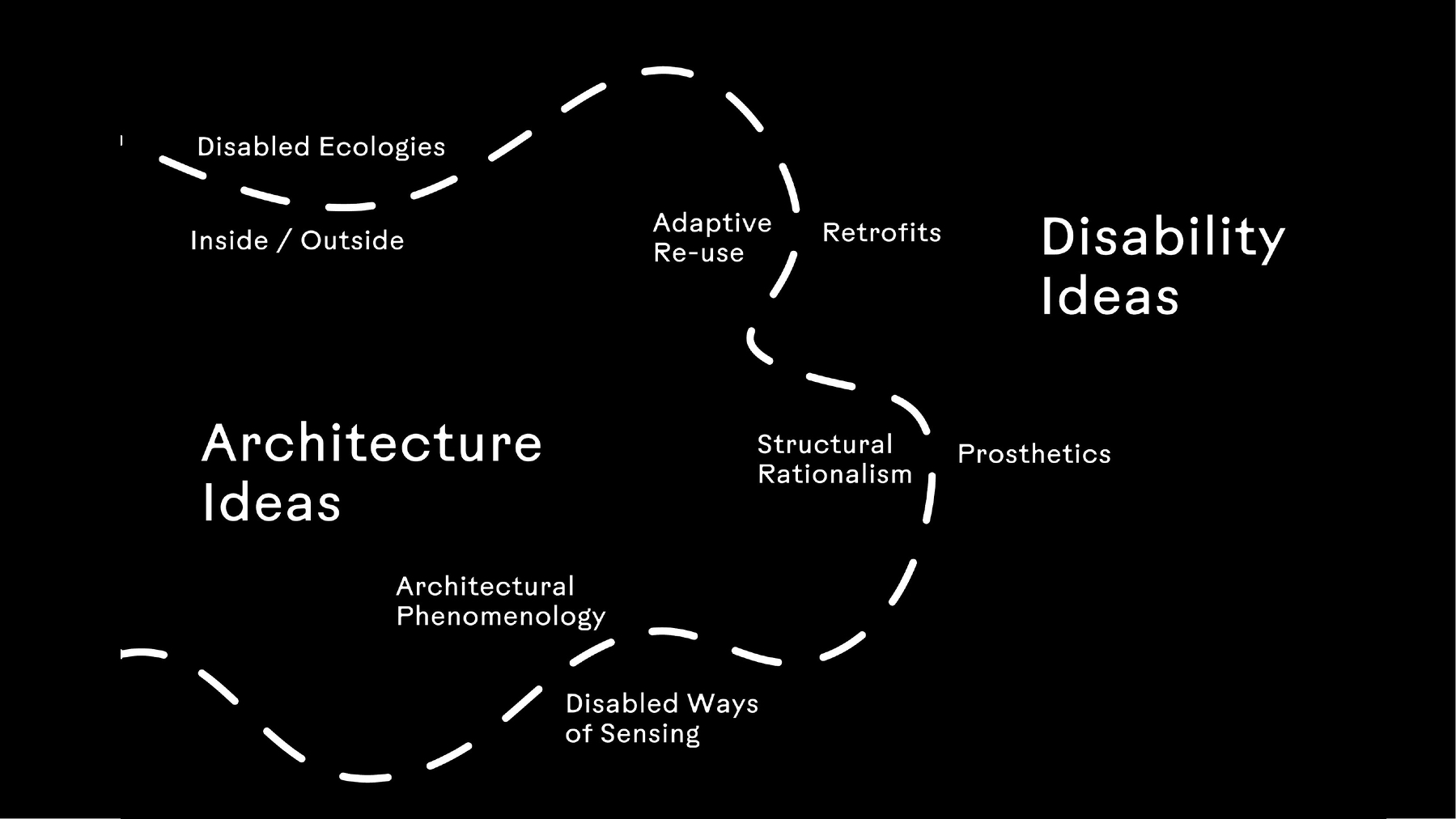
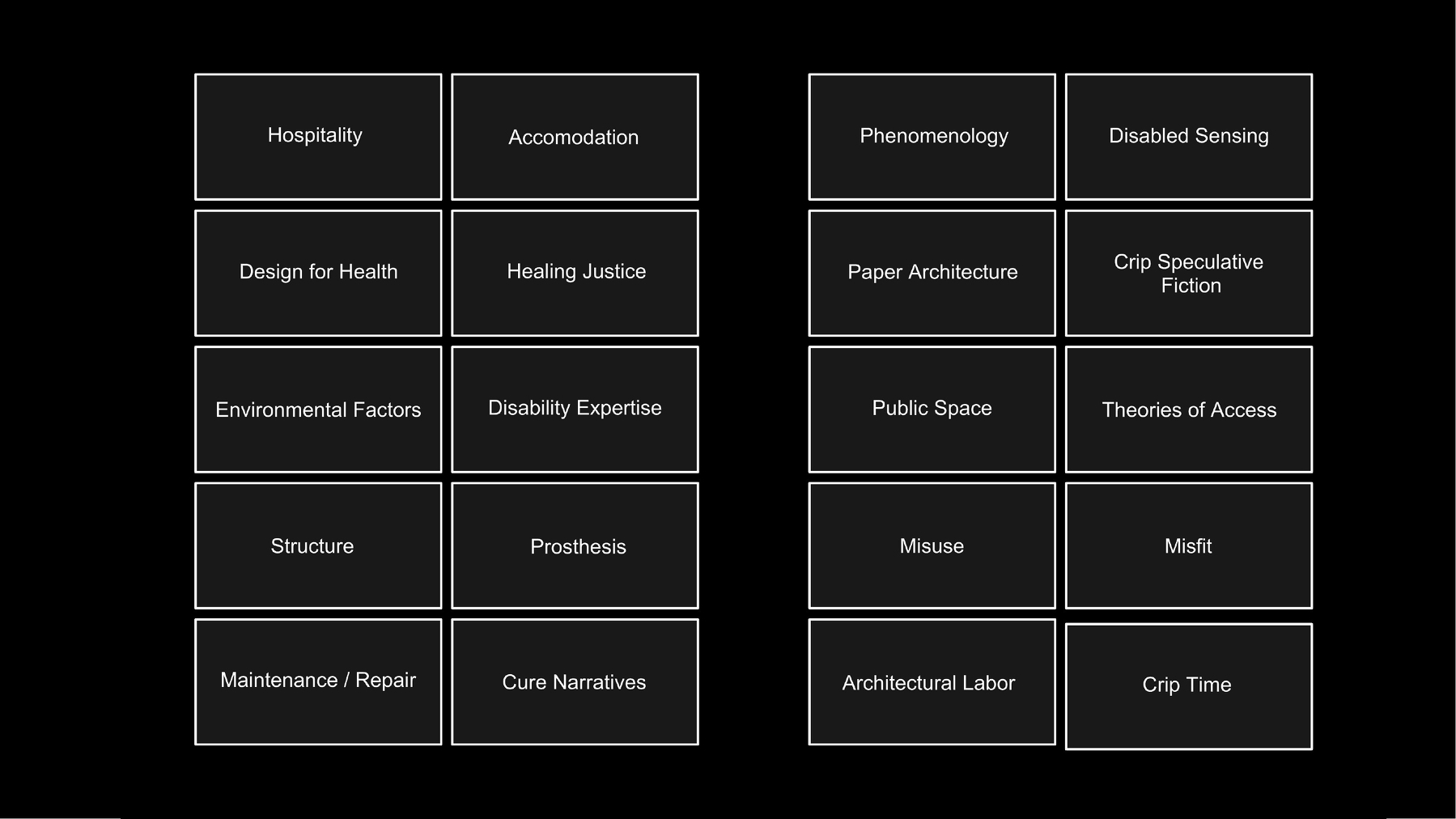
Created this resource list for the class I just spoke to. I remember just four years ago I spent so much time trying to figure out how to connect architecture and disability. Now the connections seem so clear and abundant. Feeling grateful for everyone whose work taught me to make them.


Showed this photo in a presentation today on critical access and disability aesthetics for Nima Javidi’s class “Forms of Accessibility” at the Harvard Graduate School of Design. It’s a fragment of a concrete map from my thesis project, with holes representing moments of absence in the existing city. The cast is fragile, so as you run your hand over the map it is wiped away, creating an imperceptible tactile surface with only the moment of absence remaining.

An image of two hands holding a concrete panel with a white hole in it. The panel is cast concrete and the hole is 3D printed, like a trunacated cone inset into the material. There is a rough bitmap texture etched into the concrete but it looks very fragile and irregular, like the image could be wiped away at any moment. And you can see  a bitmap of the city and a subway line. it's a map of a piece of the San Francisco Bay Area, and the map depicts imagined futures / moments of absence and desire for the city.

Great first day at the National Federation for the Blind Conference with Hannah Wong, promoting a new pre-college architecture program for blind students. Learn more at BDWBoston.com

A photograph of Hannah, a Chinese-American woman with Albinism wearing all black and standing at a tactile table. She is gesturing with her arms towards a set of tactile architecture models and a lump of unsculpted air-dry clay for a co-designed architecture model we will be making tomorrow.

Unfriendly complaint to Apple from today.


Have been keeping track of who I’ve been complaining to, about what, and how. My complaining skills are definitely improving, I think! Here is a complaint sent to the MBTA today.


Was making some artwork tests for a new project.

This is the cover for my project. The title is Of Our Own Making in a pixelated font that is stretched out in a glitchy way. The text is difficult to read and horizontally stretched..

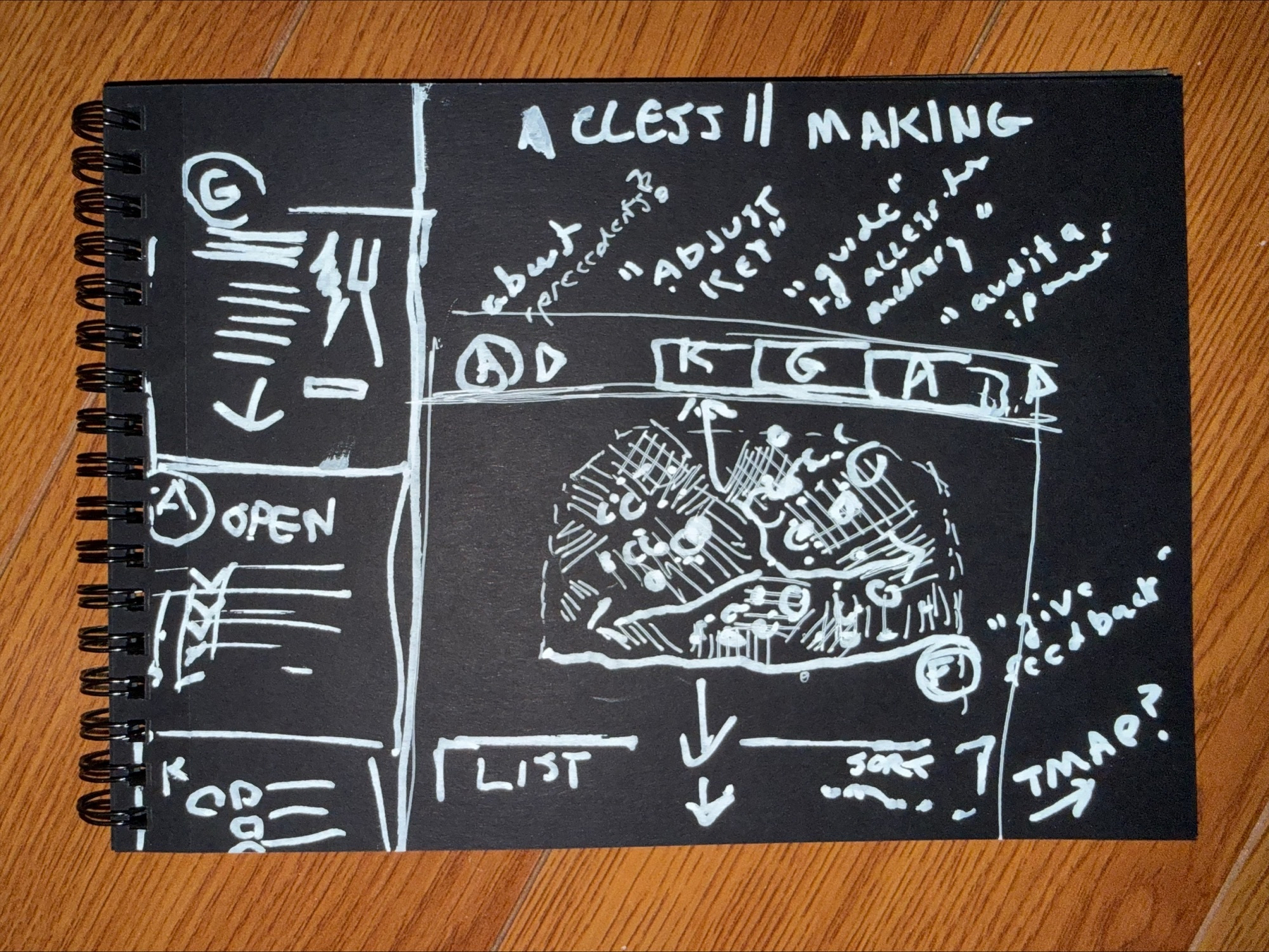
Sketch for a house at Perkins

It's a house, sort of a sketchy one. The background is black and it's drawn in white, brushy pen. It's got a pitched roof, and it's cut so you can see inside of it. It's sort of ambiguous whether it's a hosue or a model. There are trees on either side, other houses, but also things like a big light and diffuser as if there's a heliodon over it. There are a few little circles in the front that represent listening cones. And the edge of it is a little ambiguous - how thick it is. Some it has the openness that all sketches have, so it's still very loose and open to possibility. There are some arrows coming off the roof, as if the roof can be pulled off, like you would in a rough test model. And overall it feels like a housey house, drawn in darkmode.

Initial sketch for a house near Perkins


New draft of a piece of writing on Apple’s “I’m Not Remarkable Ad” - being a crip killjoy, but for good reason, I think… Not sure if I’ll publish or just needed to write it.


Starting to collect some images around low resolution . They don’t quite hold together and some different categories, beyond resolution, are emerging. For example, darkness, blur, and haze don’t seem to be about resolution primarily.