I did this interview with David Gissen a few years ago, with Sarai Huaman as a co-interviewer. it got rejected so we never published it! But I still think it’s a pretty good interview, so I’m sharing it here.


Yves Alain Bois on the image:

“The essential gap between Mattisse’s conception of art and that of Renaissance masters had to do with his rejection of any form of projection (and enlargement is perhaps the barest form of projection). Why so? Because projection always implied a clear separation, not to say hierarchization, between conception and realization. Historically when projection was applied this meant that color became a servant of drawing, coming after the fact. For the Renaissance artist, the idea is what counts most, as Irwin Panofsky brilliantly demonstrated close to a century ago. For them the idea remains the same, no matter the size of the miniaturization. In fact, many Renaissance artists used a long stick, but unlike Matisse, they used it as a mechanical projective tool with no incidence on their designs. Vasari does briefly mention a long rod with charcoal as the best way to transfer with charcoal a cartoon to a wall, but no Renaissance artist is found posing with such a device, which would have been seen as the tool manual labor from which they sought to distance themselves.”


An old image of Matisse working.

Matisse is standing in his studio drawing a mural with a very long bamboo stick.

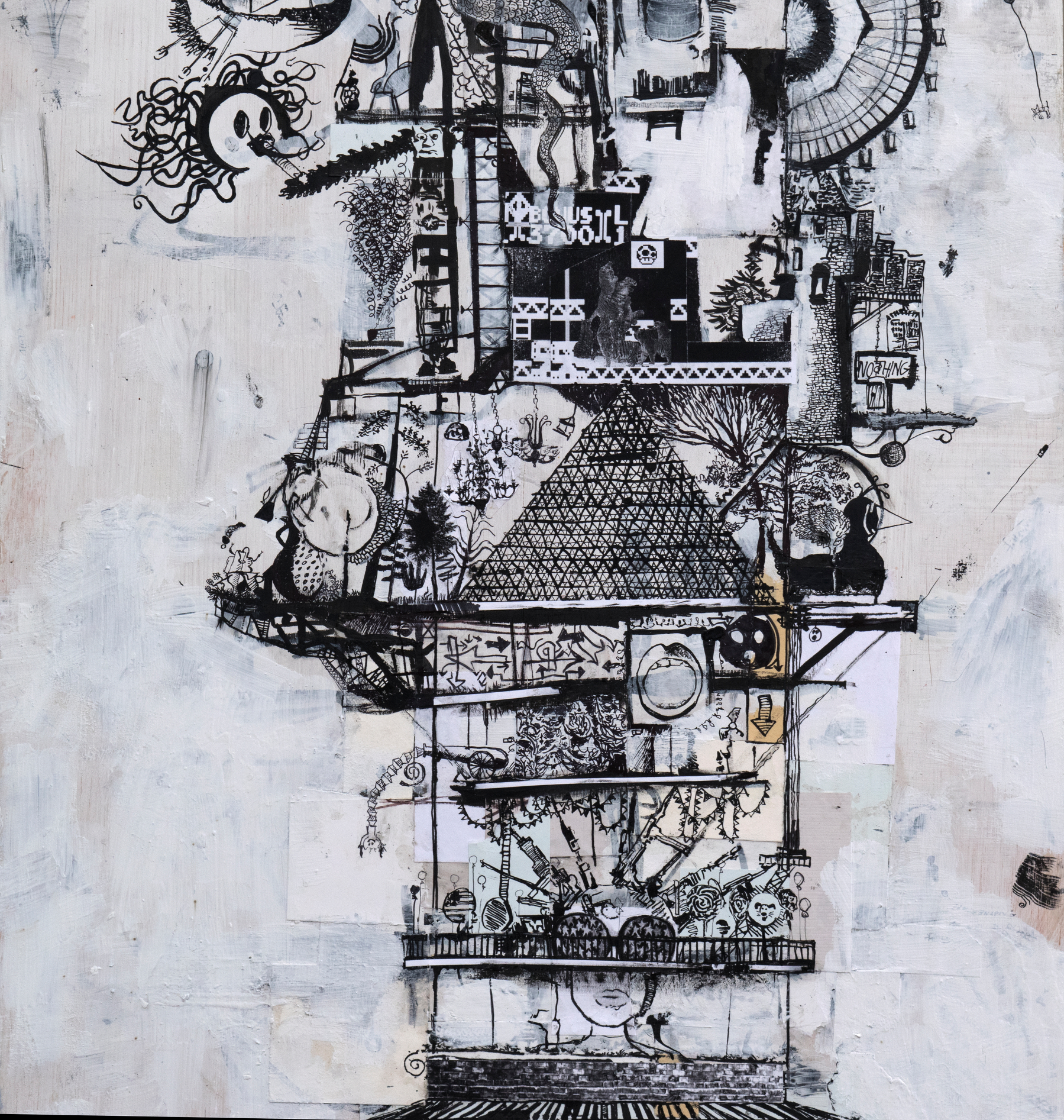
2 photos Charlotte took from around the house, creating a kind of body catalog

I'm standing on my bed hanging a sheet over the window to block the lightI'm standing next to my spice rack shaking a spice container to hear what it is


Discussion questions for a scale figure library


Sketch for a measuring rope

Rope with large and small beads. There is a large bead every foot, and in between for every inch there is a small bead. So it works like a tactile measuring tape for architectural surveying.

From around this time last year: Notes on Translation


Books i’d like to hack: 01

A book cover titled The Visual Display of Quantitative Information by Edward R. Tufte with Non written in red on it.

Was at Walden Pond today with Caroline, who found this model of a lake with ropes representing various depths. I thought it was a clever tactile. Also a great birding by ear session with Jerry Nadier.

Caroline is standing next to a wooden table which has a lake depicted on it. At different points in the lake, there are knobs you can pull up, and ropes that represent the depth. Some are very short. The one she is pulling is at the center of the lake, so it is longer. These represent a method Henry David Thoreau used to measure the bottom of the lake. He wiated until it was frozen solid, and then drilled into the ice and tied a stone to a rope, and left it sink to the bottom. He knew then that the depth of the lake was however far it took for the tension to slacken and the stone to reach the bottom of the lake.

Recently listened to this synthetic spoken manifesto produced by the Metabolist architect Toshi Ishiyanagi in the Loeb Library archives. As someone who uses a lot of synthetic speech for reading, etc., this really moved me to try to think more creatively about what that medium is capable of.


A person is seated at a table, using a tactile tablet or display with raised dots, simulating a Braille interface but much larger. Sound is being emitted from a screenless computer.

Quick design for a tool for non-visually setting the distance between a saw blade and guide. The pieces connect using disk magnets. Usually I just lasercut the distances I want to set from some scrap plywood, and then use those to set the guide, but I think this will make the whole process easier.

A diagram of an L-shaped object with markings showing incremental sections measuring 1/16, 1/8, 1/4, 1/2, and 1.

Recording done earlier this week at the site. Much more traffic on the path,. Gulls and cormorants were gathered at the dam for herring migration. Short conversation with another woman on the path, who describes the visuals


Journal entry on site geometry for house at Perkins. Feeling stuck today, and may shift to another project for a bit.


Dandelion overexposures


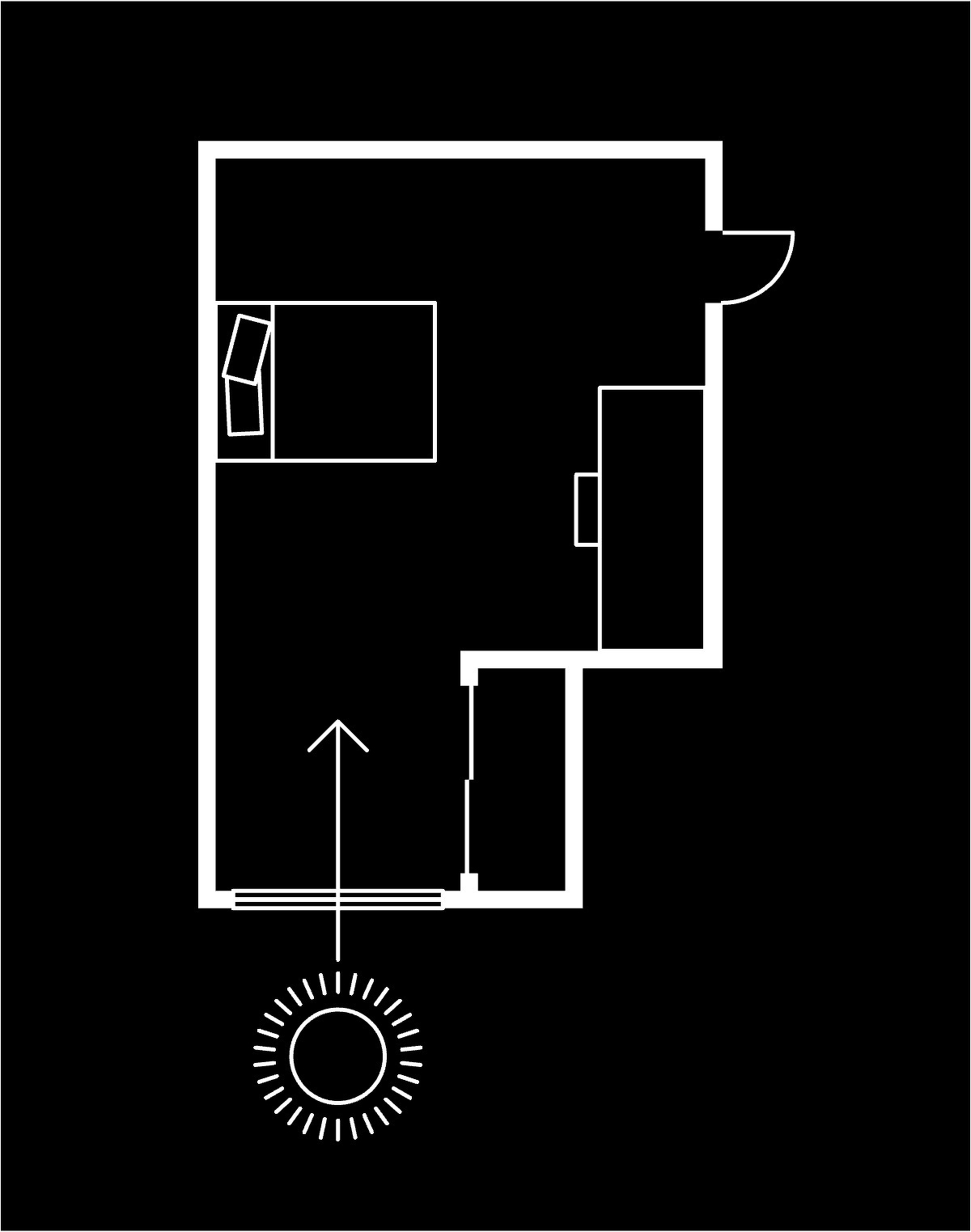
Artist housing at Perkins: sketch to diagram to rough space plan. Wrote some scripts for placing furniture sizes more quickly, which are shared on the developer forum. Will be refining there.

A white hand-drawn architectural floor plan is sketched on a black surface. It's subdivided into two artist studios and includes a top and bottom floor with some trees on the riht side of the house. It's also showing a quick sketch of the section and you can see a trus system. A wireframe model is displayed on a dark-themed computer screen in Rhino. The draawing is tightening up and some small changes have started.


Recently got to play with some architecture toys at Perkins. This one has an interesting sort of prefabrication logic that I think could be extended in interesting ways.

This is an image of a toy called Room with a View. It's some blue foam walls the interlock like puzzle pieces, as well as small pieces of plastic furniture that can go into the house.

PSA for all who need it (me): Today is not a day for clever CNC’d inside-corner design. Put in some dogbone joints and cut out the prototype.

A white-lined drawing of the flat pieces of a piece of furniture. It's a box, which can be used as a table or to prop up a piece of furniture. It's actually 33 by 33 inches, which is the size of this small foam floor-couch that I have. So if you attach two of these together it could hold up the couch. And the side piece has three different possible heights, so it can be a low, medium, or high box. The whole thing is design to be put together with tension cords and assembled or disassembled like a puzzle, without any glue or nails. Oh, and of course the dogbone joint is when the CNC, which is a spinning router, cuts the wood it creates a circular cut. This is a little hard to describe just through an image description so maybe there's a way you can actually find a piece of wood cut by a CNC to really feel this... But the dogbone is a dogbone shaped joint, which is meant to deal with that. It's sort of like the icon of a dogbone, but it's just the easiest shape to cut that allows for a flush joint. So the point of the caption is: stop worrying about trying to find some way to prevent a dogbone joint and just use the joint, because it's going to make your life so much easier. Whew, that was hard to describe, hopefully I can be more clear and concise next time *wink*

Two design podcasts I enjoyed this week: Design Emergency’s selection of case-studies on contemporary craft, and 99% Invisible’s long and winding history of the em dash


Two constellation drawings experimenting with high and low contrast

Points on a map, circled stars, floating symbols, all in the deepest darkest night. Points on a map, circles and lines, all the hazy background of the collective light of many tiny stars.